
What is USDT and why the network matters
What USDT is, why it exists on several networks, and how to verify the correct token, address, and receiving route.
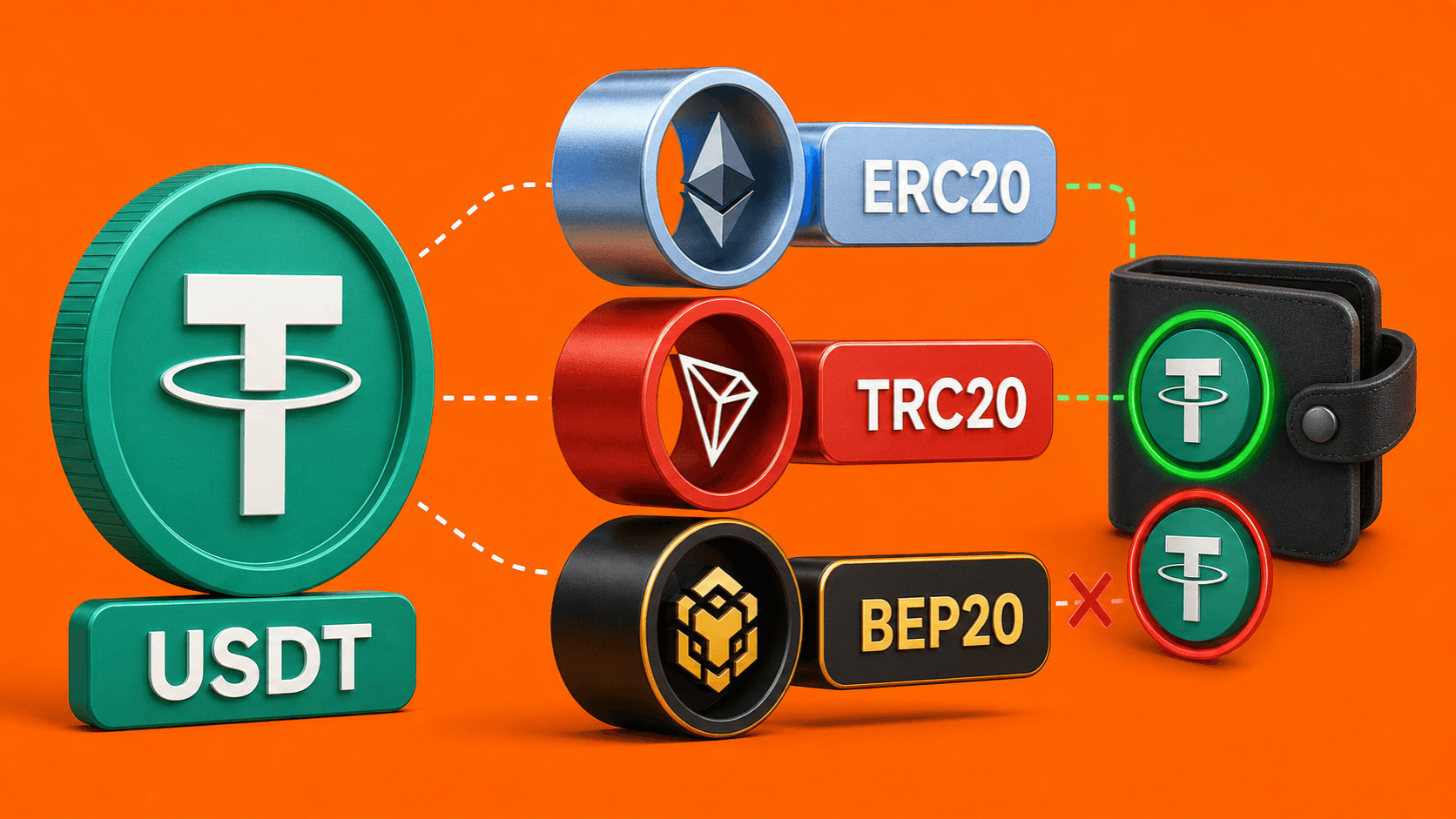
USDT is a stablecoin issued by Tether. It is designed to track the US dollar and is backed according to Tether’s reserve framework. USDT is a blockchain token, not dollars in a bank account, and its market price can sometimes move slightly above or below one dollar.
The same USDT unit can move on several blockchains. The network determines the address format, confirmation process, and what the receiving wallet must support.
What USDT is used for
People commonly use USDT to:
- receive a dollar-linked asset after exchanging BTC, ETH, or another coin;
- move value between wallets or services that support the same USDT network;
- keep part of a crypto balance in a less volatile unit;
- use applications or trading pairs that quote values in USDT.
USDT does not automatically earn interest, and holding it is not the same as holding insured bank dollars. Its operation depends on Tether, its reserves and redemption terms, and the blockchain used.
Tether publishes circulation and reserve information on its Transparency page.
Why there are different USDT networks
Tether issues or supports USDT on multiple protocols. Its current supported-protocols page is the reference for official networks and token identifiers.
Common labels include:
| Label | Network | What it means |
|---|---|---|
| USDT ERC20 | Ethereum | USDT transferred through Ethereum. |
| USDT TRC20 | Tron | USDT transferred through Tron. |
| USDT SPL | Solana | USDT transferred through Solana. |
| USDT Jetton | TON | USDT transferred through TON. |
| USDT Fungible Asset | Aptos | USDT transferred through Aptos. |
Other wallets may display bridged or platform-issued tokens with a similar ticker. Verify the network and token identifier instead of assuming every USDT label is the same route.
Why the network matters
USDT on Ethereum cannot be sent directly to a Tron deposit route, and USDT on Tron cannot be sent directly to a Solana route. The token name may match, but the blockchains process different addresses and transactions.
The receiving wallet or platform must explicitly support the selected network. A familiar-looking address is not enough: EVM-compatible networks can share the 0x format while a custodial platform supports only one of them.
Use the USDT network selection article when the destination offers several options.
How to receive USDT safely
- Open the destination wallet or exchange.
- Select Receive or Deposit.
- Choose USDT.
- Choose a network supported by that platform.
- Copy the address and any memo, tag, or comment.
- Select the same USDT network in LightSwap or the sending service.
- Check the expected amount and address before sending.
If you receive USDT into a self-controlled wallet, you usually do not need the network’s native asset just to receive it. You normally need that native asset later to send USDT: ETH on Ethereum, TRX on Tron, SOL on Solana, TON on TON, or APT on Aptos.
Official USDT versus a fake token
Anyone can create a token with a similar name or ticker. Before importing a token manually, compare its contract or asset identifier with Tether’s official supported-protocols page.
Do not send funds to a token contract address. The contract identifies the token; the receiving wallet address identifies where your funds should go.
Risks to understand
- Price risk: USDT is designed to track one US dollar, but the market price can deviate.
- Issuer risk: users rely on Tether’s reserve and redemption framework.
- Network risk: congestion, outages, or wrong-network transfers can delay access.
- Platform risk: an exchange or wallet may pause deposits or support only selected networks.
- Address risk: a wrong address or missing memo can make recovery difficult or impossible.
These are reasons to verify the route, not reasons to choose a network by ticker alone.
FAQ
Is USDT the same as USD?
No. USDT is a blockchain token designed to track USD. It is not a bank deposit or physical dollar.
Is USDT always worth exactly one dollar?
It is designed to stay close to one dollar, but its market price can move slightly. An exchange quote also includes the selected amount, route, and network.
Are ERC20 and TRC20 both USDT?
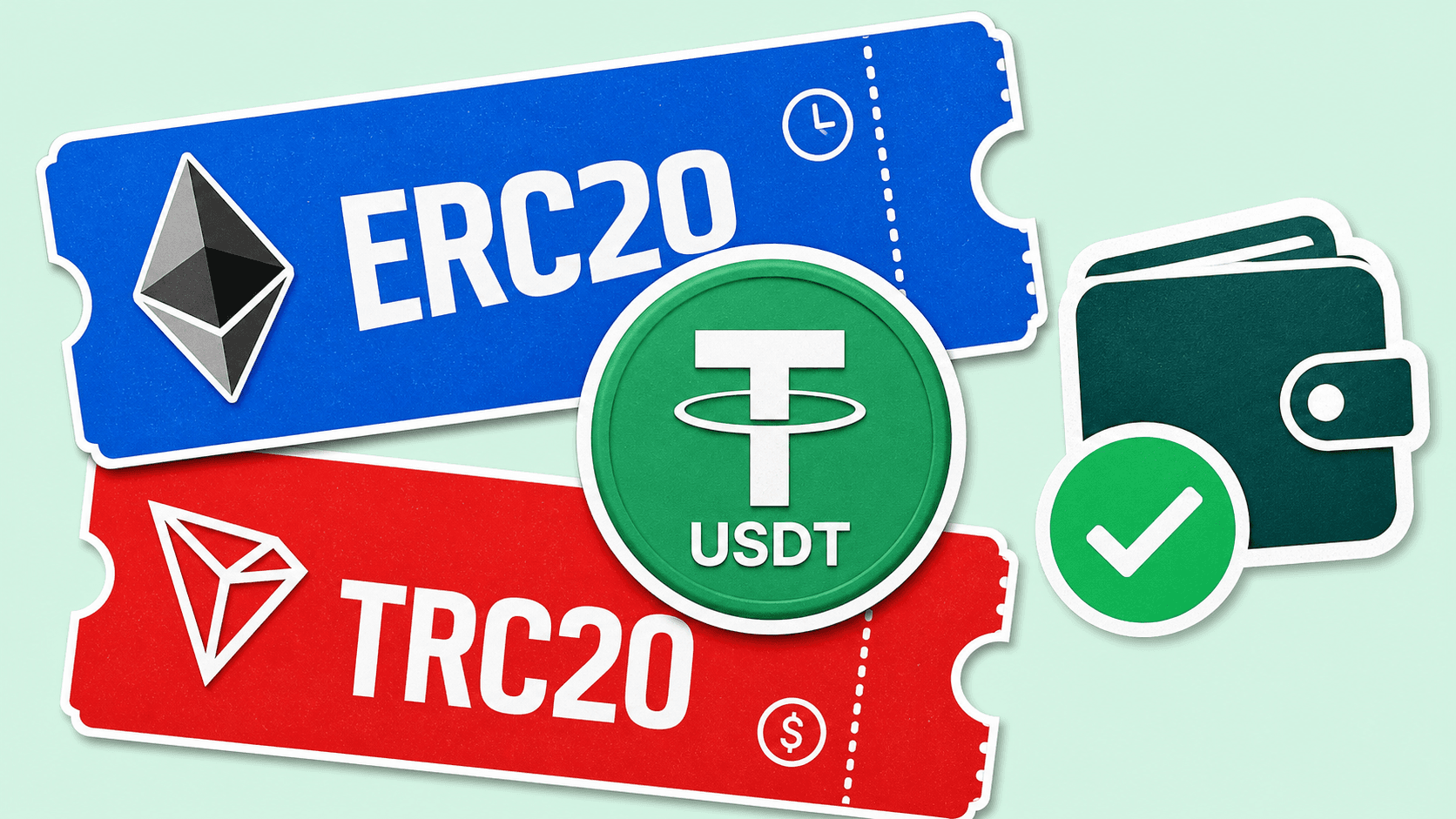
They are USDT on different networks. Use ERC20 for an Ethereum receiving route and TRC20 for a Tron receiving route.
Which USDT network should I choose?
Start with the network supported by the destination wallet, then compare the current route and expected payout. Never choose a network the receiver does not support.
What if I already sent USDT on the wrong network?
Save the TXID and contact the service controlling the receiving address. Follow the wrong-network recovery steps; recovery is not guaranteed.
Related articles
Ready to make a swap?
Choose the pair, check the route, and continue from your wallet when you are ready.
Try itChoose assets
You send
$649.73
You receive
Rate: -
Estimated time: 1 minutes