
Crypto swap vs bridge: what is the difference?
How to decide between a crypto swap, bridge, or normal transfer based on the asset and network you need to receive.
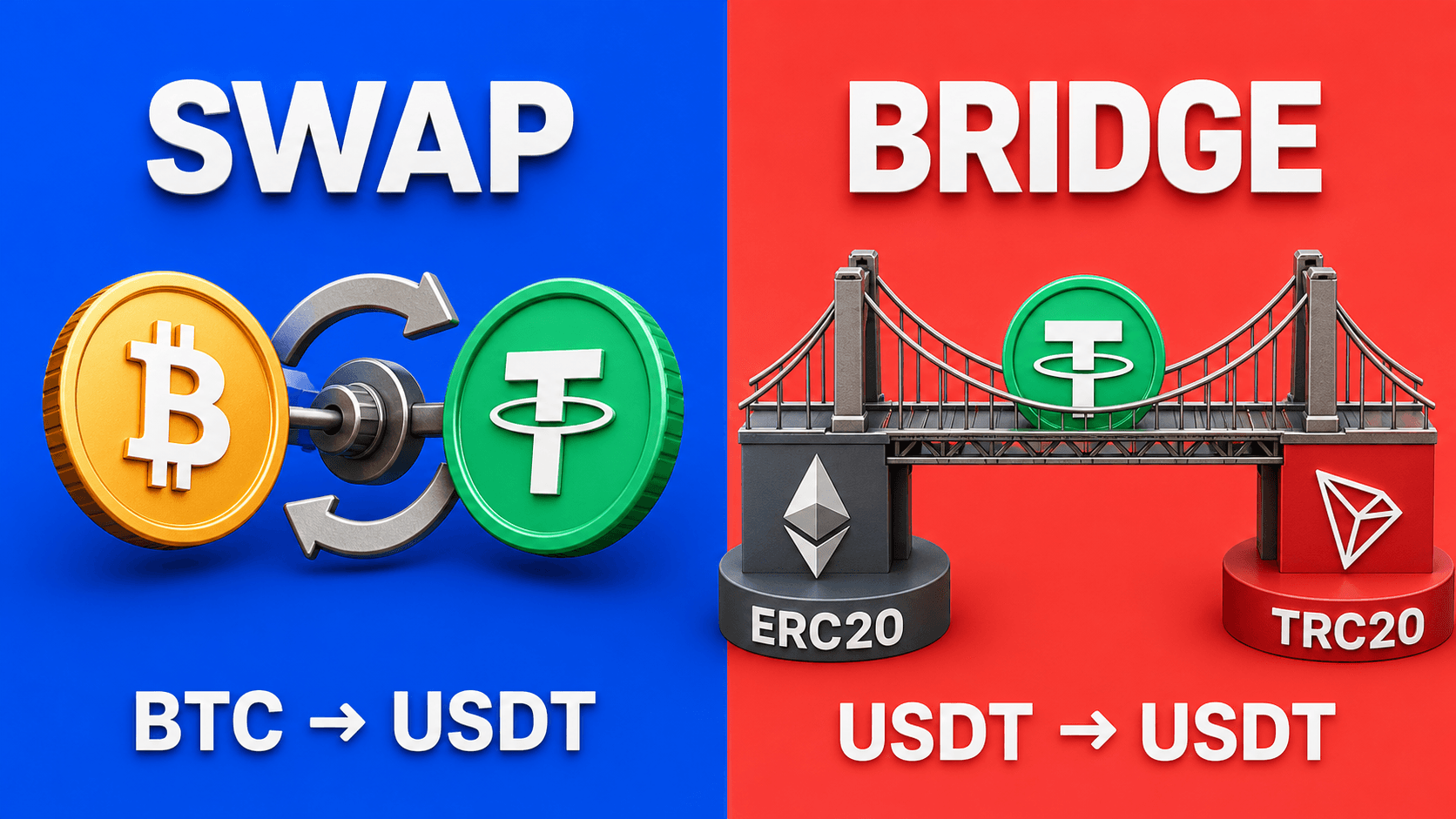
A crypto swap changes the asset you hold. A bridge moves an asset or its representation between blockchain networks. A normal transfer sends an asset to another address on the same network.
Choose from the result you need, not from the tool name.
The quickest way to choose
| What you have | What you need | Usual action |
|---|---|---|
| BTC on Bitcoin | USDT on Tron | Cross-network swap |
| ETH on Ethereum | USDC on Ethereum | Swap |
| USDT on Ethereum | USDT on another supported network | Bridge or cross-network route |
| USDT on Tron | USDT on Tron at another address | Normal transfer |
Before choosing, open the receiving wallet and confirm the exact asset and network it expects.
What a crypto swap does
A swap is for changing one asset into another, for example BTC to USDT or ETH to BTC. Services such as Uniswap provide swaps within supported networks, while LightSwap can show crypto-to-crypto routes that may start and finish on different networks.
For the user, the important output is:
- the asset received;
- the receiving network;
- the estimated amount;
- the destination address.
A swap can use several technical steps behind the scenes. You normally do not need to reproduce those steps yourself; you need to verify the final asset and network before sending.
What a bridge does
A bridge connects separate blockchain networks. It may lock or burn an asset on the source network and release or mint a corresponding asset on the destination network. The Ethereum bridge documentation explains the common models and their trade-offs.
A bridge is usually relevant when:
- you want to keep the same asset or economic value;
- the asset is currently on the wrong network for an application;
- you understand the source and destination networks;
- the receiving wallet supports the destination token version.
The asset on the destination may be a native issuer-supported token or a wrapped/bridged representation. Those are not always interchangeable on every exchange or wallet.
Risks that differ
With a swap, the main user risks are an unacceptable quote, wrong receiving address, wrong network, or deposit that does not match the instruction. Review the expected payout and why rates can change.
With a bridge, there are additional questions:
- Who verifies the cross-network message?
- Will you receive the token version the destination service accepts?
- Does the bridge require a wallet connection and more than one transaction?
- What happens if the bridge pauses or the destination network is unavailable?
- Will you need the destination network’s native asset to move the tokens later?
Ethereum.org notes that bridges can add smart-contract, counterparty, and wrapped-asset risks. Use the official bridge URL, verify the supported networks, and avoid links sent in unsolicited messages.
When neither a swap nor bridge is needed
If the asset and network already match, use a normal transfer. For example, sending USDT TRC20 from one Tron wallet to another Tron address does not require a bridge.
Do not add a bridge step unless the destination network is actually different.
How LightSwap fits
LightSwap is useful when the result is best expressed as “I have this asset and want that asset.” Select the sending asset, receiving asset, and receiving network, then review the route before making a deposit.
If you only want the same token on another network, check whether LightSwap shows a supported cross-network route. If not, use a suitable bridge after verifying the destination token and bridge risks.
Decision checklist
- Different asset needed: start with a swap.
- Same asset, different network: check a bridge or supported cross-network route.
- Same asset and same network: use a normal transfer.
- Confirm the destination wallet supports the exact asset and network.
- Check whether the destination token is native, issuer-supported, or wrapped.
- Review the amount to receive, timing, and any wallet transactions required.
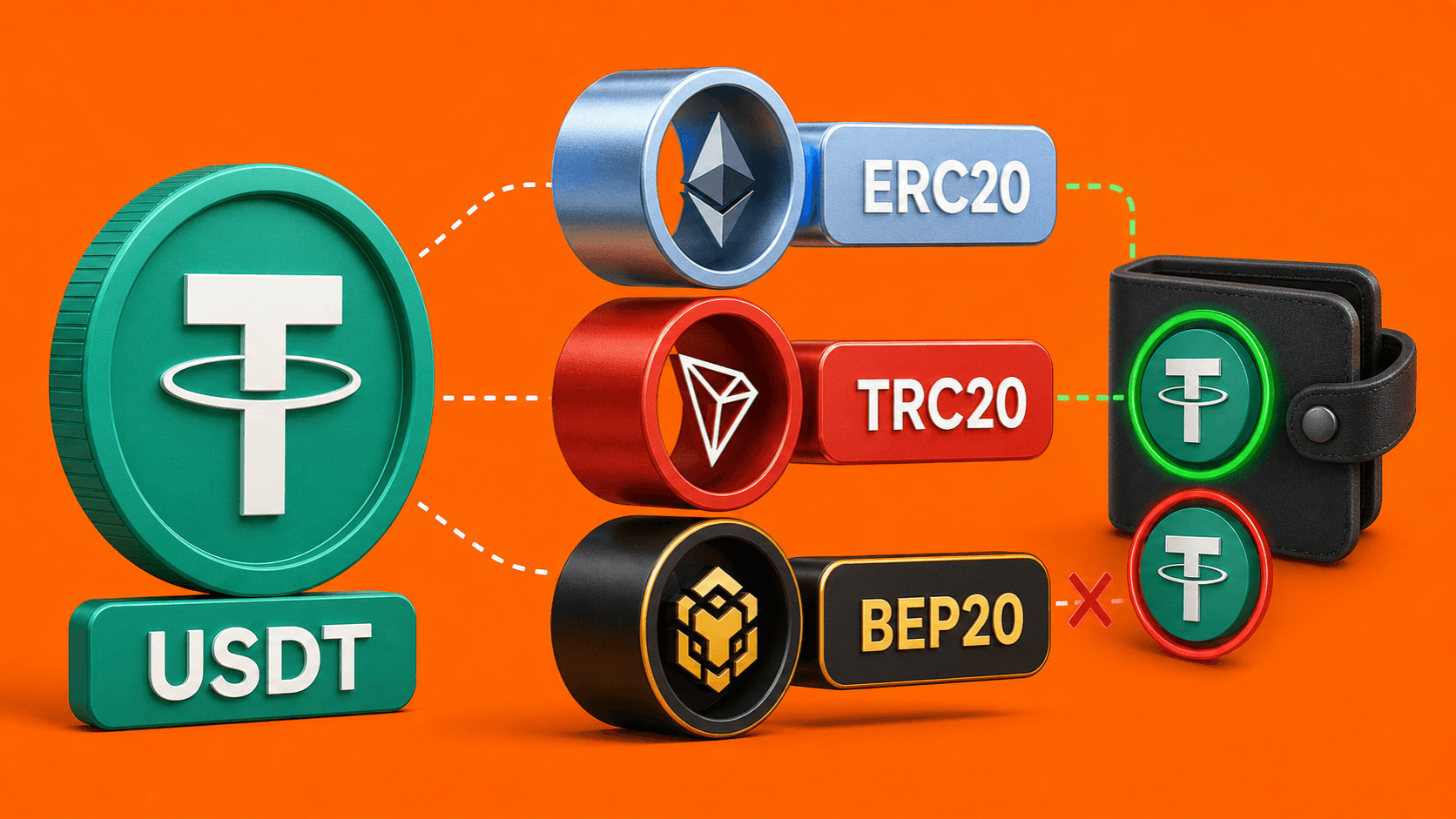
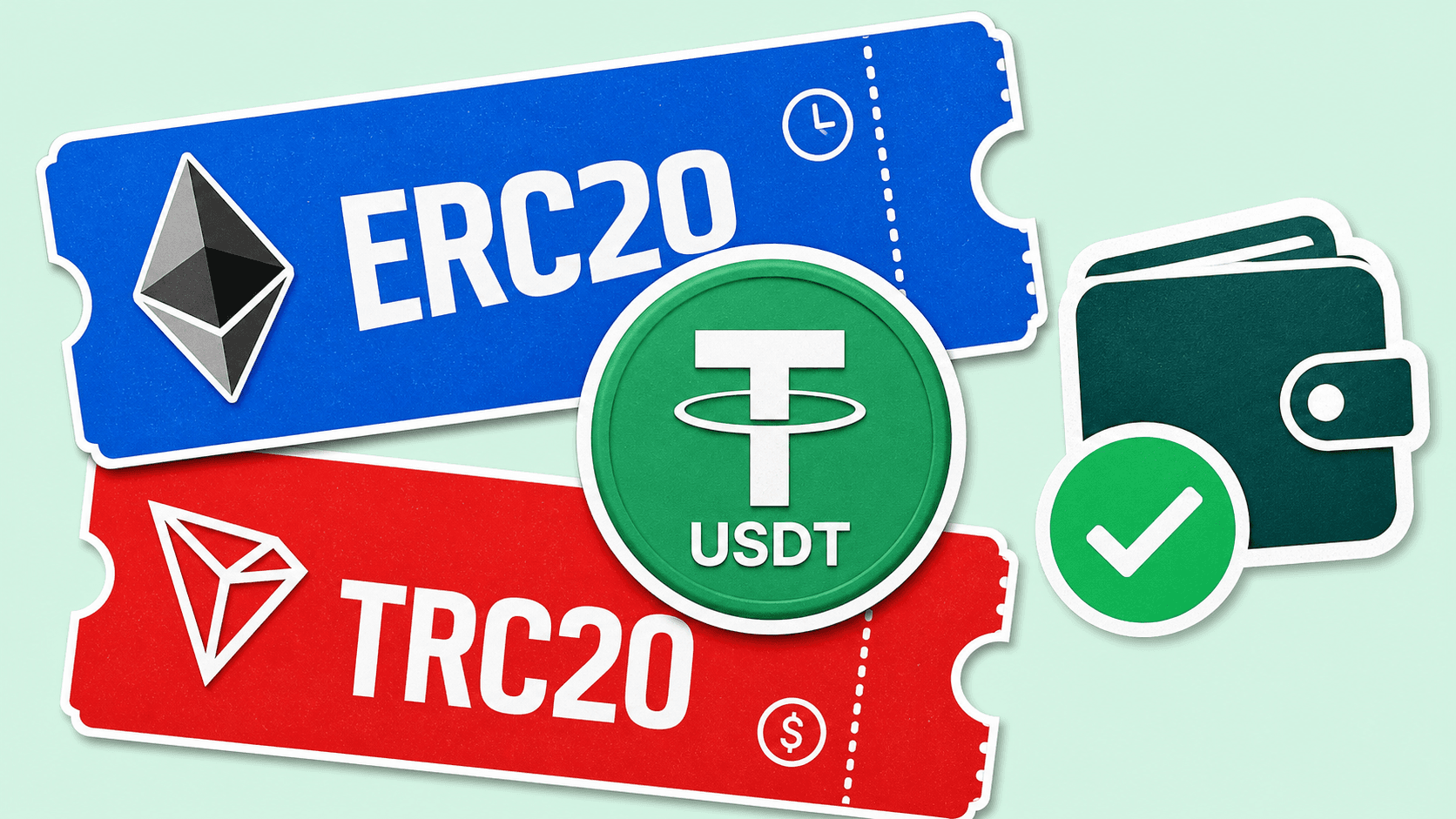
- For USDT, use the USDT network selection article.
FAQ
Can a swap also change the network?
Yes. A cross-network swap can change both the asset and receiving network in one route. Verify both outputs before sending.
Does a bridge always return exactly the same token?
Not necessarily. Some bridges create a wrapped or bridged version. Confirm that the destination wallet or platform accepts that exact version.
Is a bridge safer than a swap?
Neither label guarantees safety. Review the service, route, destination token, network support, and transaction details for the tool you use.
Related articles
Ready to make a swap?
Choose the pair, check the route, and continue from your wallet when you are ready.
Try itChoose assets
You send
$649.73
You receive
Rate: -
Estimated time: 1 minutes