
What is a crypto wallet address?
What a wallet address is, how formats differ by network, and how to copy and verify the correct receiving details.
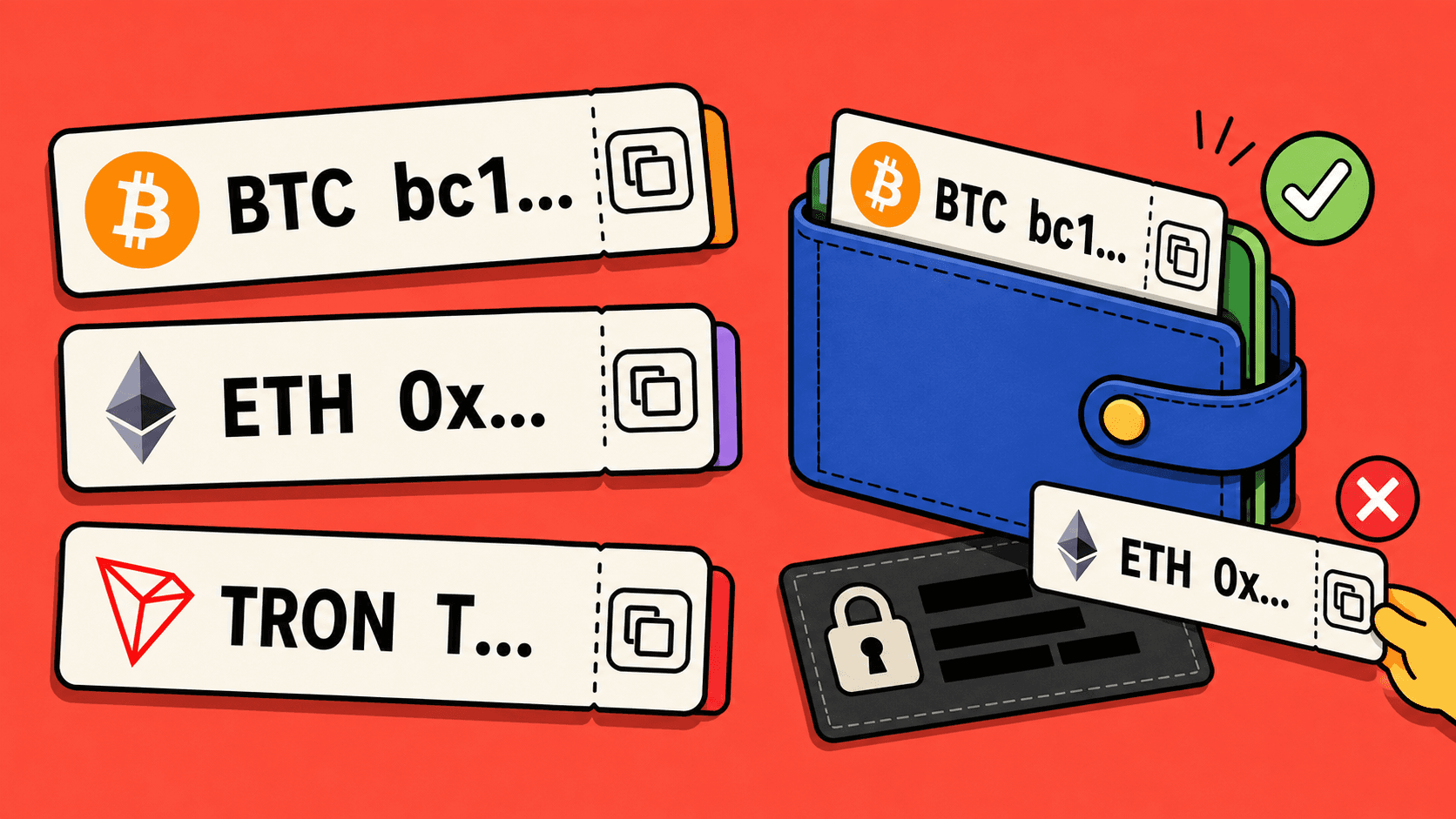
A crypto wallet address is a public identifier used to receive funds on a specific blockchain. You can share the address, but you must never share the seed phrase or private key that controls it.
The safest source is the Receive or Deposit screen for the exact asset and network you want to use.
Address, wallet, and private key are different
- Wallet: the app or device used to view balances and approve transactions.
- Address: the public destination that can be shared with a sender.
- Private key or seed phrase: the secret that controls the funds. It must stay private.
Ethereum.org’s wallet documentation compares an address to an account number and recommends copying it instead of typing it manually.
Common address formats
| Network | Typical appearance | Important check |
|---|---|---|
| Bitcoin | Often begins with bc1, 1, or 3 | Use a BTC address from the current Bitcoin receive screen. |
| Ethereum and EVM networks | 0x followed by 40 hexadecimal characters | The same shape can exist on several networks; confirm the network separately. |
| Tron | Commonly begins with T | Confirm Tron/TRC20 when receiving a token such as USDT. |
| Solana | Long base58 string without a fixed prefix | Confirm the wallet supports the exact Solana token. |
| XRP Ledger | Address commonly begins with r | A custodial deposit may also require a destination tag. |
These patterns help identify obvious mistakes, but they do not prove that a receiving service supports the selected asset or network. The Bitcoin transaction documentation covers Bitcoin address types in more detail.
One wallet can show several addresses
A wallet app may manage Bitcoin, Ethereum, Tron, Solana, and other networks. Each can have a different receiving address.
EVM-compatible networks may show the same 0x address for the same self-controlled account. That does not make the networks interchangeable. An exchange can accept that address on Ethereum but reject a deposit through another EVM network.
Always select the asset and network first, then copy the address.
How to find the correct receiving details
Open the wallet where you want to receive funds and follow the receiving flow:
- Choose Receive.
- Select the exact asset.
- Select the network.
- Copy the address shown on that screen.
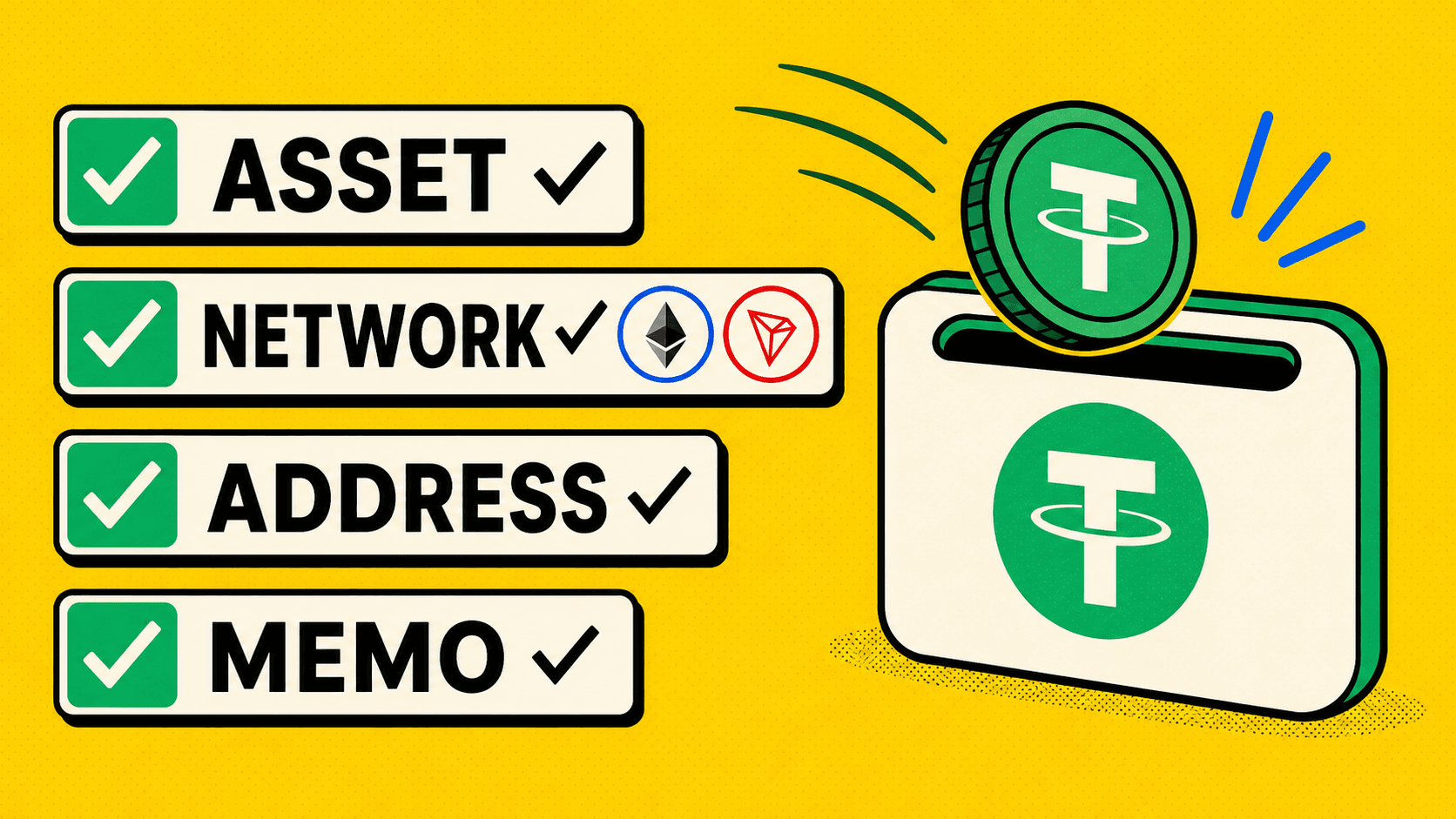
- Copy any memo, destination tag, or comment shown separately.
- Keep the receiving screen open while entering the details.
If the platform does not show the network clearly, use its official help page or support before sending.
How to verify an address safely
- Copy instead of typing.
- After pasting, compare the full address when practical, not only the first and last four characters.
- Confirm the asset and network labels again.
- Check the address on a hardware-wallet screen when one is used.
- Avoid copying from transaction history; address-poisoning entries can look similar.
- For a large normal transfer, use a small test amount when the receiving service allows it.
For a fixed-amount exchange deposit, do not split the requested deposit into a test and a remainder. Follow the exchange instruction exactly.
Address versus token contract
A receiving wallet address belongs to the user or platform. A token contract address identifies the token program on a network. They are not the same.
Do not paste a token contract into a receiving-address field. If you need to verify a token such as USDT, compare its contract or asset identifier with the issuer’s official list, then return to the wallet’s receiving address.
Using an address with LightSwap
When LightSwap asks for the receiving wallet:
- select the receiving asset and network;
- open the same asset and network in the destination wallet;
- paste its address and any required memo;
- review the route before creating the exchange.
If the route is BTC to USDT on Tron, the destination must support USDT TRC20. A previously used Ethereum address is not a substitute.
After sending, save the TXID and use the transaction tracking article if the balance does not appear.
FAQ
Is it safe to share a wallet address?
Yes. A public receiving address can be shared. Never share the seed phrase, private key, or wallet password.
Why does my Bitcoin wallet show a new address?
Many Bitcoin wallets generate new receiving addresses for privacy. Previous addresses may remain valid, but use the current receive screen unless the wallet says otherwise.
Can I use the same 0x address on Ethereum and other EVM networks?
A self-controlled wallet may use the same address, but the receiving service must still support the selected network. Match the network separately.
Can a confirmed transfer be cancelled?
Usually no. Once confirmed by the blockchain, recovery depends on the owner of the destination address. Check the wrong-network article before sending.
Related articles

Ready to make a swap?
Choose the pair, check the route, and continue from your wallet when you are ready.
Try itChoose assets
You send
$649.73
You receive
Rate: -
Estimated time: 1 minutes